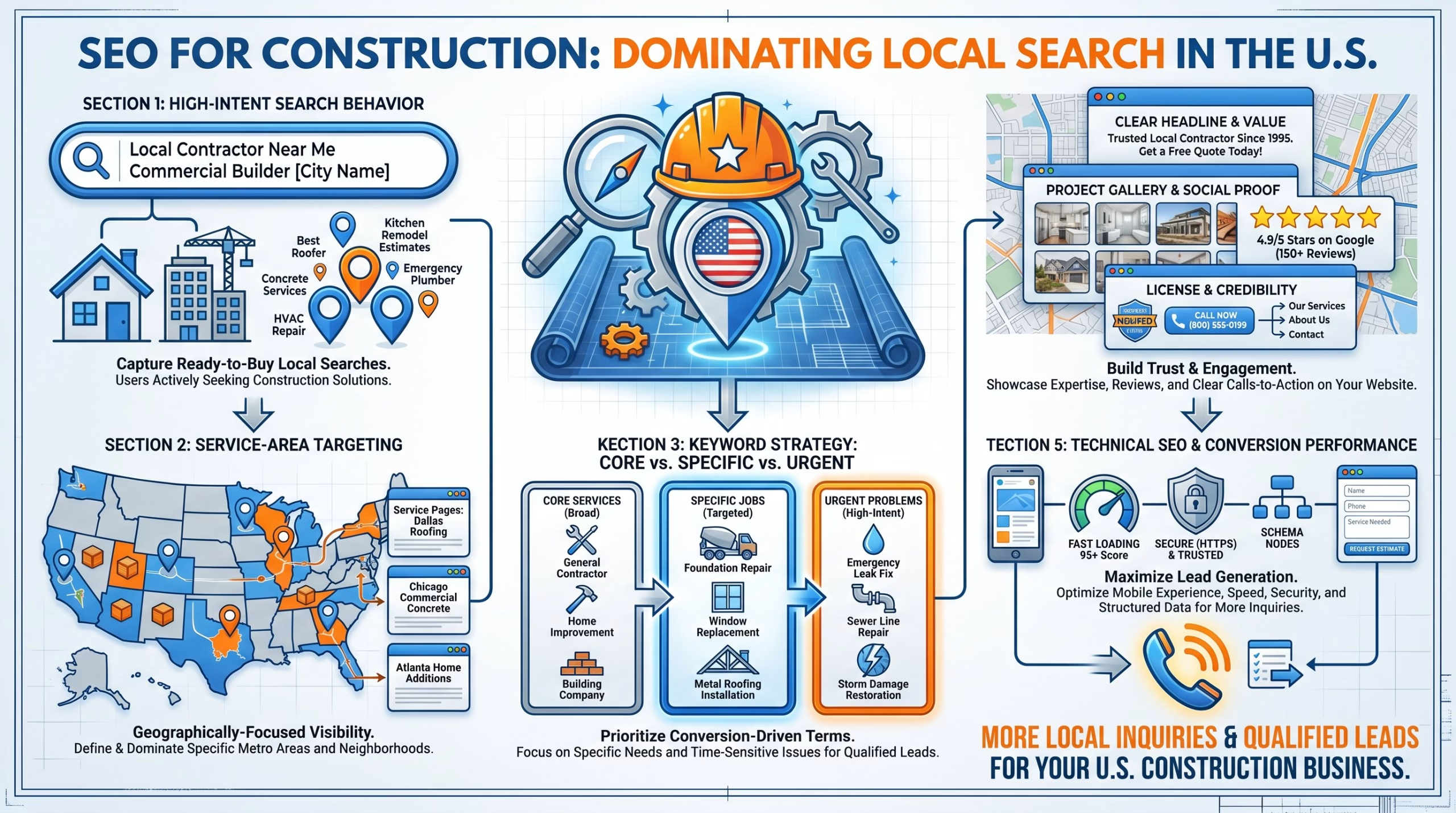
SEO for construction is no longer optional if you want steady local leads in 2026. Contractors are competing in crowded search results, map listings, and neighborhood-level service queries long before a prospect ever picks up the phone. We’ve seen good builders lose work simply because their website was thin, slow, or hard for Google to trust. The upside is encouraging: with the right construction SEO approach, you do not need to outspend bigger firms. You need clearer signals, better service pages, and stronger local proof. This guide walks through the practical pieces that actually move rankings and calls.
Key Takeaways
- Effective SEO for construction focuses on creating clear, service-specific pages that target local areas you serve, enhancing relevance and trust for Google and prospects.
- Target high-intent keywords that include specific services, locations, or problems to attract ready-to-hire customers rather than broad, low-conversion terms.
- Optimize your Google Business Profile with accurate information, recent photos, and authentic customer reviews mentioning your services and locations to boost local trust.
- Ensure your construction website is technically sound with fast mobile loading, secure HTTPS, and easy-to-use contact forms to prevent losing leads due to poor user experience.
- Use project portfolios with detailed captions and optimized images to showcase your work and improve on-page SEO for construction.
- Consistently align SEO efforts with how real customers choose contractors: service fit, local proof, trustworthiness, and easy contact options.
Why SEO Matters For Construction Companies

Construction SEO matters because most buyers search when a project becomes urgent, specific, and local. They are not browsing for entertainment. They are looking for terms like “roof repair contractor,” “commercial build-out company,” or “home addition contractor near me,” and they usually want to compare a few trustworthy options fast.
For construction companies, that means search visibility affects lead quality, not just traffic volume. A contractor who ranks for service-specific, local terms often gets better inquiries than one running broad awareness ads. We’ve also seen a common mistake: companies invest heavily in trucks, crews, and referrals but leave their site with one generic “services” page. That usually limits visibility.
If your company serves Houston, this gets even more competitive around areas like The Woodlands, Katy, and Sugar Land, where searchers often compare firms by reviews, photos, and proof of experience. Good Construction SEO Strategies help confirm legitimacy, relevance, and trust rather than chasing vanity rankings.
Do this today: list your top 5 money-making services and check whether each one has its own page. Time: 20 minutes. Best for contractors who want qualified leads, not for firms relying only on bid platforms.
How Construction SEO Works For Local Service Areas

Local construction SEO works by matching your services to the places you actually serve and proving that connection with consistent signals. Google looks for relevance, proximity, and trust. If you build custom garages in west Houston but your site only says “full-service contractor,” you make Google guess. Guessing rarely helps rankings.
Service-area SEO usually includes city pages, neighborhood references where appropriate, Google Business Profile data, local project examples, and consistent company information across the web. But there’s a warning here: stuffing city names into every paragraph can backfire. It reads badly and often signals low-quality content.
A better approach is simple. Create pages for real services in real areas. Add project photos, permit-related details, timelines, and FAQs that reflect how people in Houston actually search. Near Buffalo Bayou or in older Heights neighborhoods, remodeling searches may look very different from searches tied to newer suburban developments.
When we plan local content, we also connect it to site structure and user experience because rankings alone are not enough. A strong Construction Website Design: An approach helps visitors move from search to quote request without friction.
Start by mapping each service to each real service area you want to grow in. Time: 30 minutes. This is for contractors with defined territories, not for companies taking jobs anywhere and everywhere.
Keyword Strategy For High-Intent Construction Searches

The best keyword strategy for construction SEO starts with buyer intent, not search volume. High-intent searches usually include a service, a location, or a problem. Think “kitchen remodel contractor Houston,” “metal building installer,” or “foundation repair estimate.” These searches may have lower volume than broad terms, but they convert better.
We group keywords into three buckets:
- Core service terms: general contractor, roofing contractor, remodeling contractor
- Specific job terms: bathroom renovation, tenant improvement, room addition
- Problem or urgency terms: storm damage repair, leaking roof contractor, failed retaining wall
One lesson we learned the hard way years ago: chasing broad keywords can inflate traffic while producing weak leads. If you rank for “construction ideas,” that may bring DIY researchers instead of buyers. Tools from Moz can help estimate difficulty and intent, but the real test is whether the term sounds like something a ready-to-hire customer would type.
For contractors comparing agencies, this is also where strategy matters more than busy reports. A useful SEO partner should tie keyword choices to leads, service lines, and conversion pages.
Try this: pull your last 20 customer inquiries and highlight the exact phrases people used. Time: 25 minutes. Best for owners who want better-fit leads, not just more clicks.
On-Page SEO Essentials For Service Pages And Project Portfolios

On-page SEO for construction works best when each page has one clear purpose. A service page should explain what you do, where you do it, who it is for, and why someone should trust you. A portfolio page should prove that work with details, photos, and outcomes.
Here’s what strong pages usually include:
- A clear H1 focused on one service
- A concise intro that names the service area naturally
- Service details, process, materials, and timelines
- Trust signals such as licenses, insurance, warranties, or associations
- Internal links to related pages like SEO for construction and design resources
- Project galleries with captions that name the location, scope, and result
Many contractor sites make one painful mistake: they upload great project photos with filenames like IMG_2044.jpg and no context. Google cannot infer much from that. Add descriptive image names, alt text, and short project summaries.
If you’re rebuilding pages, Construction Website Design: A resource planning can help align layout with conversions, not just looks.
Do this today: rewrite one core service page so the first screen states the service, city, and next step clearly. Time: 45 minutes. This is for companies with existing sites that feel vague or generic.
Google Business Profile, Reviews, And Local Trust Signals

Your Google Business Profile often influences calls before your website does. For many construction searches, prospects compare map results first, then click through only after they feel some trust. That makes your profile, reviews, categories, and photos central to construction SEO.
Start with the basics: correct business name, service categories, hours, service areas, phone number, and website link. Then strengthen the profile with recent photos, project updates, and review responses. Google’s own guidance in Google Search Central reinforces the value of clear site structure and search-friendly business information.
Reviews matter most when they mention specific services and locations naturally. A review that says “they handled our patio cover project professionally in Houston” is more useful than “great company.” We also tell clients not to script every review request too tightly. Real language sounds more credible.
Trust signals extend beyond GBP. Make sure your business info is consistent across directories, your site shows real project evidence, and your contact page feels current. One honest warning: if you have weak customer service, SEO will not hide it for long.
Start by auditing your GBP photos and asking three recent customers for specific, truthful reviews. Time: 20 minutes. Best for local contractors who depend on calls and quote forms.
Technical SEO Fixes That Help Contractor Websites Perform Better
Technical SEO helps contractor websites rank and convert by removing friction. If your pages load slowly, break on mobile, or confuse search engines, even strong content can underperform. This is where many construction businesses quietly lose leads.
The highest-impact fixes are usually straightforward:
- Improve mobile speed and image compression
- Fix broken links and redirect old URLs properly
- Use clean page titles and meta descriptions
- Add schema where relevant for local business details
- Secure the site with HTTPS
- Make forms easy to complete on a phone
We’ve seen contractors spend thousands on redesigns that looked polished but buried service pages, used giant images, and tanked load times. That hurts both rankings and conversions. Good Construction SEO Strategies for link generation should be supported by a technically sound site, not blocked by it.
If you run crews in the field all day, remember this: many prospects are searching from a truck, jobsite, or kitchen table on mobile. Your site has to work in real conditions, not just on an office monitor.
Try this: run your homepage and top two service pages through a speed test and note the biggest issues. Time: 15 minutes. This is for any contractor site older than two years, especially if mobile leads feel weak.
Conclusion
SEO for construction works when it reflects how real customers choose contractors: by service fit, local proof, trust, and ease of contact. The strongest gains usually come from fixing basics well, not chasing tricks. If you start with better service pages, stronger local signals, and a faster site, you’ll be in a much better position to earn qualified leads over time.
Frequently Asked Questions about SEO for Construction
Why is SEO important for construction companies in 2026?
SEO is crucial because most construction buyers search locally and urgently for specific services like “roof repair contractor near me.” Effective SEO improves visibility for these high-intent searches, resulting in better-quality leads rather than just more traffic.
How can I optimize my construction website for local service areas?
Create dedicated pages for each service in the specific areas you serve, including project photos, FAQs, and local details. Avoid keyword stuffing and focus on proving your relevance and trustworthiness for each neighborhood or city.
What keyword strategy works best for construction SEO?
Focus on high-intent keywords that include specific services and locations, such as “kitchen remodel contractor Houston.” Avoid broad terms like “construction ideas” that attract less qualified traffic. Analyze your recent customer inquiries to identify real search phrases used.
What on-page SEO essentials should a construction service page have?
Each page should have a clear H1 with the service and location, detailed service descriptions, trust signals like licenses and warranties, and image galleries with descriptive filenames and alt text to improve Google’s understanding.
How does a Google Business Profile influence construction SEO?
Your Google Business Profile often drives calls before your website does. Having accurate business info, relevant categories, recent photos, and reviews that mention specific services and locations helps build local trust and encourages prospects to contact you.
What technical SEO fixes help improve a construction website’s performance?
Key fixes include improving mobile speed, fixing broken links, using clean page titles and meta descriptions, adding local business schema, securing the site with HTTPS, and ensuring forms are easy to complete on mobile devices for better rankings and conversions.