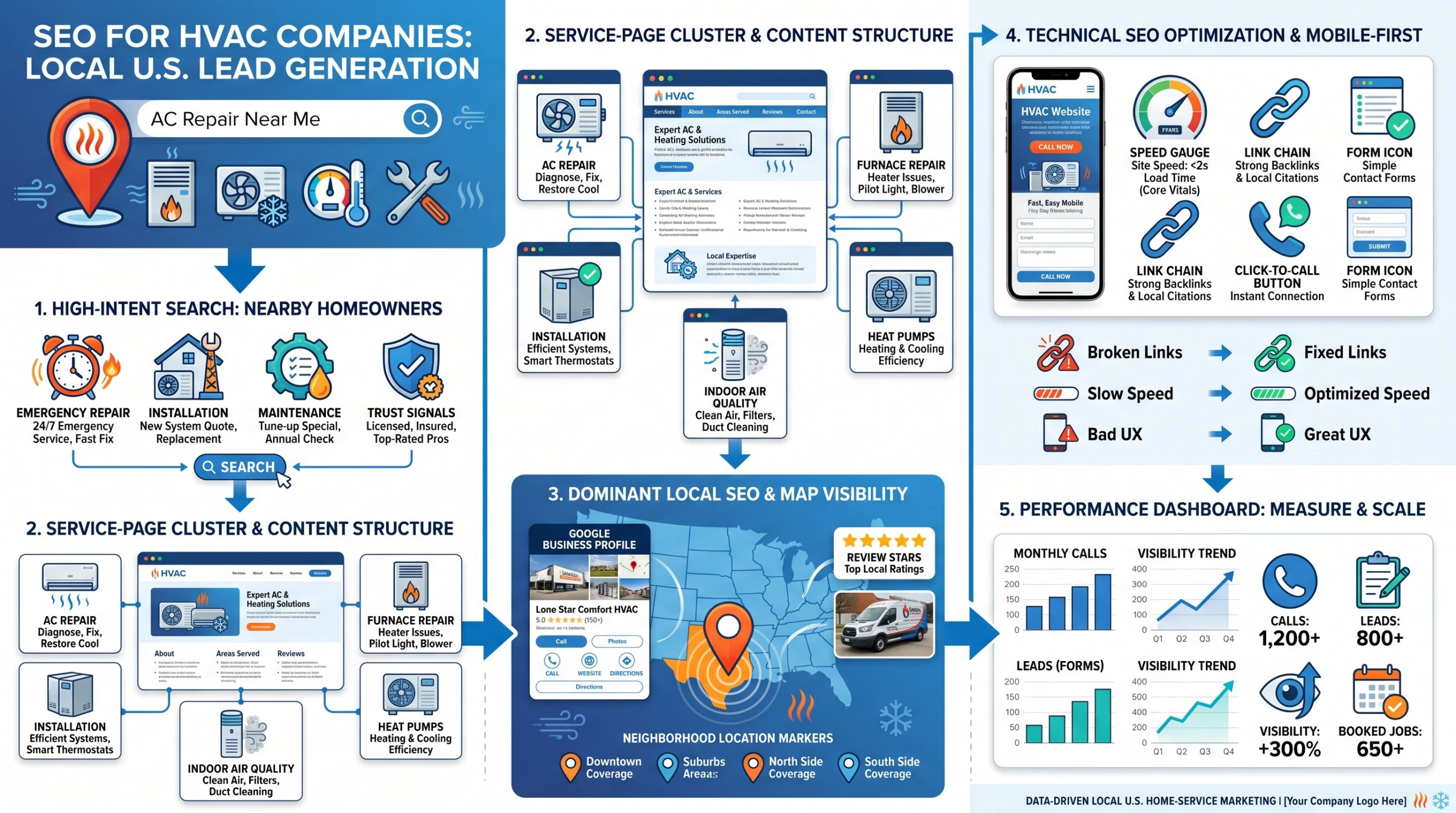
SEO for HVAC companies works best when it solves one simple problem: showing up when someone nearby needs heating or cooling help right now. If your company isn’t visible for searches like “AC repair near me” or “furnace install Houston,” those calls usually go to a competitor.
We’ve worked with small and mid-sized businesses long enough to know this part stings: many HVAC owners do solid work, then lose leads because their website, Google Business Profile, or local pages send weak trust signals. This guide breaks down what matters, what wastes time, and what to fix first if you want more booked jobs from local search in Houston and beyond.
Key Takeaways
- SEO for HVAC companies succeeds by targeting high-intent local searches like “AC repair near me” to capture urgent customer needs.
- Create dedicated service pages that clearly address specific HVAC services, customer needs, and local areas to improve rankings and trust.
- Optimize your Google Business Profile with accurate details, real photos, targeted service areas, and actively manage customer reviews to boost local SEO.
- Fix technical website issues like slow mobile speed, broken links, and hard-to-use forms to enhance user experience and convert more leads.
- Track essential SEO metrics such as organic calls, form submissions, and booked jobs to ensure your SEO efforts drive actual business results.
- Start with focused improvements like optimizing your top service page and Google Business Profile, then consistently monitor calls and leads for steady local growth.
Why SEO Matters For HVAC Companies In A Competitive Local Market

SEO for HVAC companies matters because local search often catches buyers at the exact moment they need service. A homeowner with a dead AC in July is not browsing for fun. They’re comparing who looks trustworthy, nearby, and easy to call.
That’s why SEO is less about chasing vanity rankings and more about owning high-intent searches in your service area. In a city like Houston, where neighborhoods from The Heights to Sugar Land can have very different search patterns, your visibility needs to match where you actually work. A strong local presence also reduces dependence on paid ads, which can get expensive fast during peak seasons.
We’ve seen a common mistake: HVAC companies build one generic “services” page and assume that’s enough. It usually isn’t. Buyers search by problem, system, urgency, and location.
For a broader breakdown of SEO for HVAC companies, this is where long-term lead flow starts.
Do this today: Search your top 5 services plus your city and nearby areas. Note which competitors appear in both organic results and the Map Pack. Time: 20 minutes. Best for owners who want steady local lead growth, not quick spikes.
How HVAC Customers Search And What That Means For Your SEO Strategy

HVAC customers usually search by urgency first, then trust. That means your SEO strategy should match the phrases people use when they’re hot, cold, worried, or comparing quotes.
Most searches fall into a few buckets:
- Emergency intent: “24 hour AC repair,” “furnace not turning on”
- Service intent: “AC repair Houston,” “heat pump service near me”
- Installation intent: “new HVAC system cost,” “mini split installation”
- Maintenance intent: “HVAC tune-up” or seasonal checkups
Google has been clear through Google Search Central that helpful, people-first pages tend to perform better than thin keyword pages. And tools from Moz can help you confirm whether people search “air conditioning repair” more often than “HVAC repair” in your market.
One honest lesson here: businesses often write for industry language, not customer language. “Condensing unit diagnostics” may be accurate, but “outside AC unit not working” is what many people actually type.
Do this today: Pull your last 20 calls or form leads and write down the exact words customers used. Build page topics from those phrases. Time: 30 minutes. Best for teams revising content: less useful if you still don’t know your core services.
Build Service Pages That Rank For High-Intent HVAC Searches

The best service pages for SEO for HVAC companies answer one specific need clearly. A page should target a distinct service, explain what you do, who it’s for, where you offer it, and how someone can contact you fast.
At minimum, create separate pages for AC repair, AC installation, furnace repair, furnace replacement, heat pump service, indoor air quality, and maintenance plans if you offer them. Each page should include:
- A clear headline tied to the service
- Signs the customer may need help
- What your process looks like
- Brands or systems you work on
- Service area details
- FAQs about cost, timing, and urgency
If you’re building out this structure, both HVAC SEO In 2026: and HVAC Contractor SEO show the kind of service-topic coverage that supports stronger local rankings.
A warning, though: don’t clone the same page across 20 cities with just the location swapped. Google usually spots that, and users do too.
Do this today: Start with your highest-margin service and rewrite that page around one search intent only. Time: 45 to 60 minutes. Best for companies with generic pages that blend every service together.
Strengthen Local SEO With Google Business Profile, Service Areas, And Reviews

For most HVAC companies, your Google Business Profile is the front door of local search. If it’s incomplete, outdated, or inconsistent with your website, you’ll lose calls before anyone reaches your homepage.
Your profile should have accurate categories, current hours, service areas, photos of real trucks and jobs, and a business description written in plain language. Reviews matter too, not just for star ratings but for relevance. When customers mention “AC repair,” “furnace replacement,” or neighborhoods you serve, that can reinforce local trust.
In Houston, local detail helps when it’s real. Mentioning service to areas like Katy or Memorial makes sense if your crews actually cover them. Mentioning every suburb in Southeast Texas does not.
We’ve also seen companies ignore reviews after a bad week. That’s a mistake. A calm, useful reply often says more about your business than the complaint itself.
If you’re comparing outside help, How To Choose lays out what to look for in reporting and local SEO support.
Do this today: Add 10 new jobsite photos, verify your service areas, and request 3 reviews from recent happy customers. Time: 25 minutes. Best for owner-led teams and office managers who manage calls and reputation.
Fix The Website And Technical SEO Issues That Cost You Leads

Technical SEO problems hurt SEO for HVAC companies when they block crawling, slow the site, or make conversion harder on mobile. In plain English, if your site is slow or confusing, rankings and leads both suffer.
The usual issues are familiar:
- Slow page speed, especially on mobile
- Broken links or missing pages
- No unique title tags or meta descriptions
- Weak internal linking between services and locations
- Forms that are hard to use on phones
- Click-to-call buttons buried too low
This is where web design and SEO overlap. A site can look fine and still underperform because the structure is messy. We’ve made this mistake ourselves on older projects years ago: too much copy, not enough hierarchy, and no clear path to call. Pretty frustrating when traffic shows up and the phone doesn’t.
Use the guidance in Google’s documentation, then test key pages on actual devices, not just desktop previews.
Do this today: Open your site on your phone, try to book service in under 60 seconds, and list every friction point. Then fix the top 3. Time: 30 minutes. Best for companies getting traffic but not enough calls or forms.
Track The SEO Metrics That Matter For Calls, Forms, And Booked Jobs
The right SEO metrics for HVAC are not just rankings. What matters is whether organic search turns into calls, forms, scheduled visits, and revenue.
Start with these numbers:
- Organic calls from your website and Google Business Profile
- Form submissions by service page
- Map Pack visibility for core keywords
- Organic traffic by city or service area
- Conversion rate on top landing pages
- Booked jobs tied back to source when possible
This matters because SEO for HVAC company decisions go sideways when reporting is too vague. “Traffic is up” sounds good until you realize none of that traffic came from repair or install pages. We prefer simpler reporting that connects visibility to outcomes. If a page ranks, gets clicks, and never converts, it needs work. If a page brings fewer visits but more booked jobs, that’s a winner.
For small and mid-sized businesses, a basic dashboard with Google Analytics, Search Console, call tracking, and CRM notes is usually enough.
Do this today: Pick 3 KPIs: organic calls, form leads, and booked jobs from search. Review them weekly for 8 weeks. Time: 20 minutes to set up. Best for owners who want clearer decisions, not more marketing jargon.
Conclusion
SEO for HVAC companies works when it matches how real people search, supports trust locally, and makes it easy to contact you fast. The biggest gains usually come from better service pages, stronger local signals, and fewer website friction points.
Start with one fix, not ten. Clean up your Google Business Profile, improve your top service page, and track calls from search. Done consistently, that’s how local visibility turns into booked work.
SEO for HVAC Companies: Frequently Asked Questions
Why is SEO important for HVAC companies in competitive local markets?
SEO helps HVAC companies appear in local searches when customers need urgent heating or cooling services. It builds trust, matches service areas, and reduces costly reliance on paid ads, especially in diverse markets like Houston.
How should HVAC companies structure service pages for better SEO performance?
Each service page should focus on one specific need, detailing the service, signs customers need help, the process, brands worked on, service areas, and common FAQs, avoiding generic pages that blend multiple services.
What role does the Google Business Profile play in local SEO for HVAC companies?
A complete and accurate Google Business Profile with correct categories, service areas, current photos, and customer reviews strengthens local trust and visibility, directly influencing calls and leads for HVAC services.
How can HVAC businesses improve website performance to enhance SEO and lead generation?
Fixing slow mobile page speed, broken links, unclear navigation, weak internal linking, and adding visible click-to-call buttons improves user experience, leading to higher rankings and increased conversions.
What keywords and phrases do HVAC customers commonly use when searching for services?
Customers search with urgent phrases like ’24 hour AC repair,’ service searches such as ‘heat pump service near me,’ installation queries like ‘mini split installation,’ and maintenance terms like ‘HVAC tune-up,’ reflecting immediate and specific needs.
How can HVAC companies track SEO success beyond just rankings?
Tracking organic calls, form submissions, map visibility, traffic by area, conversion rates, and booked jobs linked to SEO sources provides clearer insight into whether SEO efforts are generating valuable business outcomes.