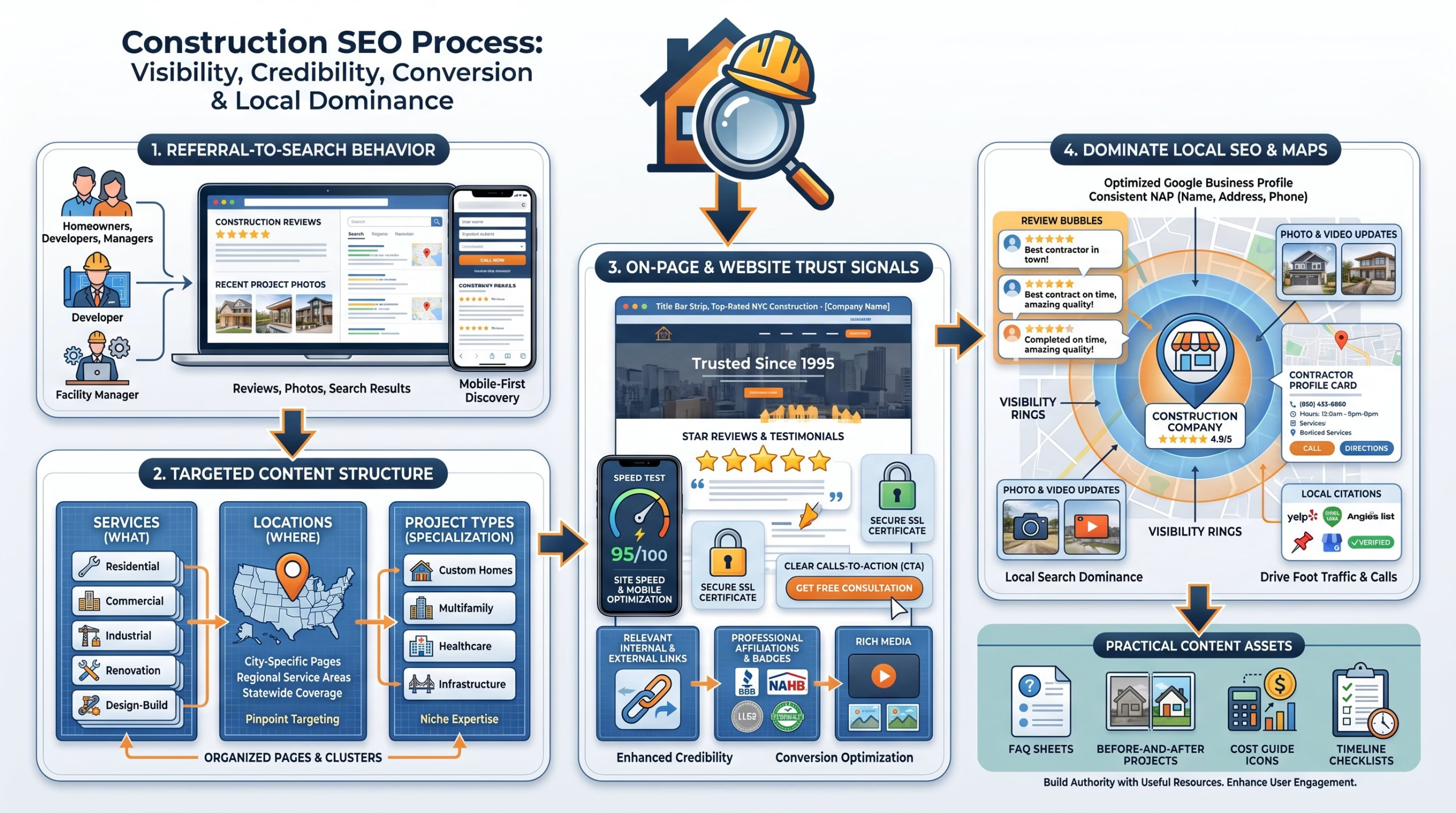
SEO for construction companies works best when it helps the right clients find you at the exact moment they need a contractor. In 2026, referrals still matter, but they usually get verified online first. A homeowner checks your reviews. A developer scans recent projects. A facility manager compares service pages, locations, and proof of experience. We’ve seen good construction firms lose work not because they lacked skill, but because their website gave search engines and buyers too little to trust. That gap is fixable, and it starts with a practical plan.
Key Takeaways
- SEO for construction companies is essential to build online trust and visibility that complements traditional referrals.
- Optimize your website with clear, service-specific pages combined with precise location targeting to match how customers search.
- Focus on on-page SEO essentials like descriptive titles, fast mobile performance, and trust signals to improve rankings and conversions.
- Leverage local SEO tools like a complete Google Business Profile and actively manage reviews to increase map pack visibility.
- Create practical content that answers common client questions and showcases your expertise to attract well-qualified leads.
- Start improving SEO by mapping recent inquiries to identify gaps and updating one service page and your business profile for immediate impact.
Why SEO Matters For Construction Companies In A Referral-Driven Market

Referrals are still powerful, but they rarely close the deal on their own anymore. Most prospects search your company name, your services, and your reviews before they call.
That matters for any construction business that depends on local trust. A referral may get you on the shortlist, but your online presence often decides whether you stay there. If your site is thin, slow, outdated, or vague about what you actually build, people hesitate. And in construction, hesitation costs projects.
We’ve also seen a common mistake: companies assume word-of-mouth is enough because it worked for years. Then a competitor with better local visibility starts showing up for “general contractor near me” or “commercial build-out contractor Houston,” and the phone shifts their way.
Strong seo for construction companies supports three things at once:
- Visibility for local and service-specific searches
- Credibility through reviews, project proof, and clear service pages
- Conversion when visitors can quickly tell if you fit their job
For firms in Houston, that trust check often happens fast, whether someone is in The Heights, Katy, or near the Energy Corridor. Start by Googling your top three services and note what shows up on page one in 15 minutes.
How Homeowners, Developers, And Commercial Clients Search For Contractors

Different buyers search differently. Homeowners often search by problem and location, while developers and commercial clients search by project type, capability, and proof.
A homeowner might type “home addition contractor Houston” or “kitchen remodel contractor near me.” A commercial prospect is more likely to search “tenant improvement contractor Houston” or “commercial general contractor medical office build-out.” They also compare more pages before reaching out.
This is where many companies miss the mark. They build one generic Services page and expect it to rank for everything. It usually won’t. Search engines need clearer signals, and buyers do too. Guidance from Google Search Central consistently points back to helpful, specific pages that match user intent.
Good seo for construction company websites mirrors the way people actually search:
- By service: roofing, remodeling, tenant improvements, ground-up construction
- By location: Houston, Sugar Land, Cypress
- By project type: retail, medical, office, custom home
- By urgency: repair, estimate, bid, timeline
If you want better leads, map your last 20 inquiries by exact search intent. Do this in a spreadsheet today. It takes about 30 minutes and usually reveals obvious page gaps.
Build A Construction SEO Strategy Around Services, Locations, And Project Types

The best construction SEO strategy is simple to explain: create pages around what you do, where you do it, and the kinds of jobs you want more of.
That means one page should not try to rank for every service in every city. Instead, build focused pages such as commercial roofing, restaurant build-outs, or custom home renovations, then connect them to relevant service areas and project examples. This structure makes your site easier for both users and search engines to understand.
For example, a contractor serving Houston might have separate pages for:
- Home additions
- Commercial renovations
- Office build-outs
- Retail construction
- Design-build services
Then add location context only where it’s real and useful. If you actively serve Houston, Bellaire, and The Woodlands, say that clearly. Don’t stuff a list of random cities.
We often recommend pairing core pages with supporting resources like Construction SEO Strategies and broader planning around Digital Marketing For Construction.
If you’re a smaller firm, start with five high-value pages first. Block 90 minutes this week and outline the services that drive the best margins, not just the most volume.
On-Page SEO Essentials That Help Construction Websites Rank And Convert

On-page SEO should make your website clearer, not cleverer. If a page can’t quickly answer what you do, where you work, and why someone should trust you, rankings and conversions both suffer.
For seo for construction companies, the essentials are straightforward:
- Title tags and meta descriptions that name the service and location clearly
- H1 and subheads that match real search terms
- Project photos with descriptive alt text
- Internal links between services, locations, and case studies
- Fast mobile performance and simple contact options
- Trust signals like licenses, associations, reviews, and service areas
A quick warning here: many construction sites look good on desktop but feel clunky on a phone in the field. That’s a real problem. Homeowners and project managers often check you between meetings, from a truck, or after a referral text.
Data providers and tools from Moz can help teams identify page issues, but the bigger win is usually clarity. We’ve seen firms add service-specific headings and better project proof and get better leads before rankings even fully moved.
Start by rewriting one top service page today. Give yourself 45 minutes and make the first screen crystal clear.
Local SEO For Contractors: Google Business Profile, Reviews, And Map Pack Visibility

Local SEO helps contractors appear when nearby clients search with high intent. For many firms, your Google Business Profile matters almost as much as your website.
The Map Pack often shows before the organic listings, especially for searches like “general contractor near me.” If your profile is incomplete, inaccurate, or inactive, you lose visibility and trust. Your business name, address, phone number, categories, photos, hours, and service areas need to stay consistent.
Reviews matter too, but not just the star rating. Detailed reviews that mention project type, communication, and location help reinforce relevance. And yes, responding matters. Calm, specific replies show that a real company stands behind the work.
A smart local setup includes:
- A fully built out Google Business Profile
- Review requests after completed milestones
- Location-relevant website pages
- Consistent contact details across the web
- Recent project photos and updates
If you want a more complete framework, pages on SEO For Construction In and Construction SEO Strategies for cover the full process.
Claim your profile, verify every field, and upload 10 recent job photos today. Budget about 40 minutes.
Content Ideas That Showcase Expertise And Bring In Qualified Leads
The best content for construction companies answers the questions clients ask before they request an estimate. It should filter out poor-fit leads and build confidence with serious ones.
That means your content should be practical, not fluffy. Good topics include:
- Cost factors for common project types
- Timelines and phases for remodels or build-outs
- Permit or inspection considerations in Houston
- Material comparisons
- Before-and-after case studies
- “What to expect” guides for homeowners or commercial tenants
One honest lesson here: a lot of firms avoid publishing pricing-related content because they fear scaring people off. But vague websites often attract the most unqualified leads. Clear ranges, process explanations, and project examples save time for everyone.
For local relevance, mention real context where appropriate. If you work on retail spaces near the Galleria or office interiors around Downtown Houston, that kind of detail helps readers picture your experience.
This advice is for companies that want better-fit leads, not for firms chasing traffic for its own sake. Start by publishing one FAQ article based on a question your sales team heard this week. Give it 60 minutes, then link it from the matching service page.
Conclusion
SEO for construction companies is really about clarity, trust, and local relevance. Referrals still open doors, but search helps people decide who gets the call. When your site aligns services, locations, project types, and proof, better leads follow. Start small if needed, but start with intent. One strong page and one accurate profile update can move more than another month of guessing.
Frequently Asked Questions About SEO for Construction Companies
Why is SEO important for construction companies in a referral-driven market?
SEO is crucial because referrals now lead prospects to verify contractors online first by checking reviews, recent projects, and service details, which builds trust and influences their hiring decisions.
How should construction companies structure their website for better SEO?
They should create focused pages around specific services, locations they actively serve, and project types to provide clear signals to search engines and match real user search intent.
What local SEO practices benefit construction firms the most?
Optimizing a complete and accurate Google Business Profile, regularly collecting detailed reviews, updating photos, and maintaining consistent contact info boosts visibility in local Map Packs and supports search trust.
How do different clients search for construction services online?
Homeowners usually search by problem and location, like ‘kitchen remodel near me,’ while developers and commercial clients look for specific project types and proof of capability, such as ‘commercial tenant improvement contractor Houston.’
What on-page SEO elements should construction company websites focus on?
Clear title tags and meta descriptions, descriptive headings, project photos with alt text, internal linking, trust signals like licenses and reviews, and optimized mobile usability are key on-page SEO essentials.
How can construction companies use content to attract qualified leads?
Publishing practical content such as cost factors, timelines, permit considerations, and before-and-after case studies helps answer client questions, filtering poor-fit leads and building confidence with serious prospects.