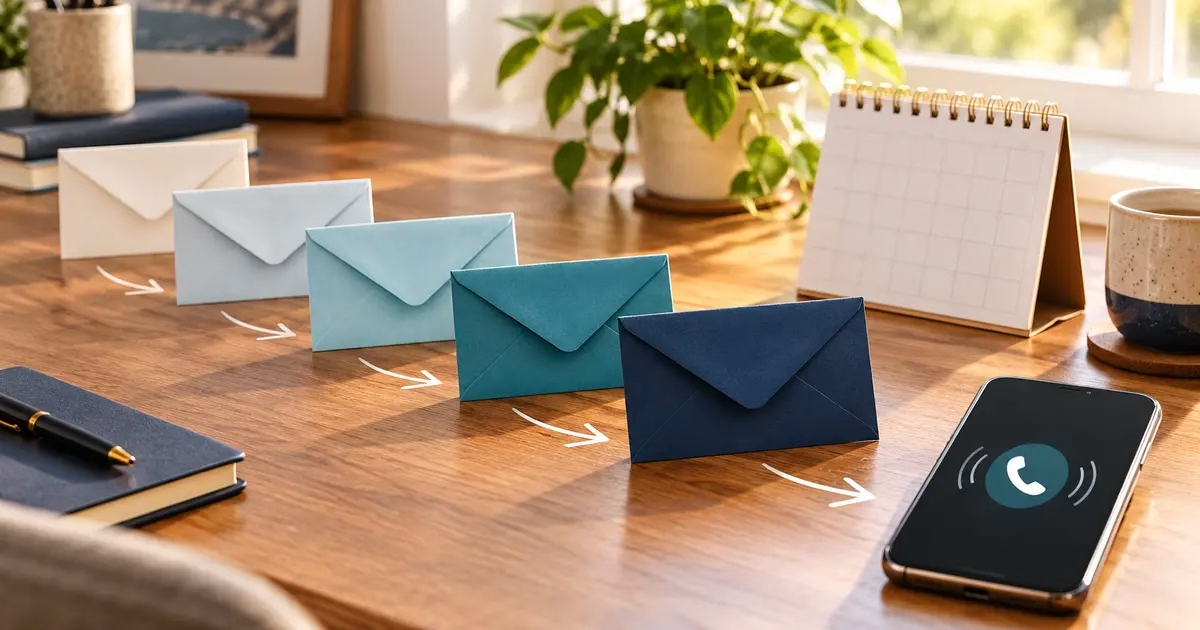
A prospect requests information through your website and receives a generic confirmation. Then nothing happens until a salesperson has time to call. If the prospect does not answer, the lead is marked cold and eventually forgotten. Meanwhile, the customer is still comparing options, trying to understand pricing, wondering what happens next, and deciding which company feels most trustworthy.
A short email nurture sequence can keep that conversation moving. It does not replace a timely phone call or thoughtful sales response. It supports those efforts by answering common questions in a useful order and giving the prospect several comfortable ways to take the next step.
Big Splash Web Design & Marketing provides email marketing services that connect strategy, content, segmentation, automation, and reporting. This guide outlines a five-email sequence local service businesses can adapt without turning every message into a hard sell.
Key takeaways
- Send an honest confirmation immediately after the inquiry.
- Build each email around one customer question or decision.
- Match the sequence to the service’s urgency and buying timeline.
- Make replies easy and route them to a monitored inbox.
- Pause or change automation when a real conversation begins.
- Judge the sequence by qualified conversations and sales outcomes, not open rates alone.
Understand what nurturing is supposed to accomplish
Lead nurturing helps an interested person gain enough clarity and confidence to continue. The prospect may be ready now, gathering information for later, comparing several companies, or waiting for another decision-maker. A useful sequence respects those differences.
The emails should reduce uncertainty. They can explain process, timing, preparation, common tradeoffs, and what makes a good fit. They can demonstrate experience without making unsupported claims. They can also help people self-select. A clear message about service areas, project types, or minimum requirements can prevent wasted conversations while making the right prospects more comfortable.
Nurturing is not permission to overwhelm someone. Each email should earn its place. If a message does not answer a real question, add context, or make the next step easier, remove it.
Prepare the system before writing messages
The sequence begins with the form, CRM, and email platform. Confirm that the website records the correct email address, consent information, source, requested service, and date. Decide where replies will go and who monitors that inbox.
Create basic segments. At minimum, separate new prospects from current customers, and distinguish major service lines when their questions differ. A plumbing emergency should not enter the same timeline as a planned kitchen remodel. A dental consultation should not receive language written for an industrial RFQ.
Define exit rules. The sequence should pause when someone replies, schedules, becomes a customer, opts out, or is disqualified. It should also handle bounced messages and duplicate contacts. Good writing cannot compensate for a workflow that keeps sending irrelevant emails after the situation changes.
Email one: Confirm the request and set expectations
Send the first email immediately. Its purpose is simple: confirm that the request arrived, restate the subject, and explain what happens next.
Use a clear subject line such as “We received your request” or “Next steps for your consultation request.” Thank the person without exaggeration. If a team member normally responds during business hours, say so. If urgent requests should use a phone number, explain that plainly.
Include only one or two helpful actions. The prospect might reply with an important detail, schedule a call, or review a short page explaining the process. Avoid presenting every service or attaching a stack of documents.
The message must be honest about automation. It can feel warm and useful without pretending a person has already reviewed the request.
Email two: Explain the process
Send the second message after the expected first-contact window, often one or two days later for a non-emergency service. Explain what working with the company typically looks like.
Break the process into a few understandable stages. For example: initial conversation, assessment, recommendation, estimate, scheduling, service, and follow-up. Mention what the customer should prepare and what the business will handle.
Process content reduces anxiety because uncertainty often delays decisions. A prospect may not be resisting the service itself; the person may be unsure whether the next call will become a high-pressure sales pitch or require information they do not have.
End with a low-friction invitation. Ask the reader to reply with a question, choose a time, or confirm the best contact method.
Email three: Address the most common concern
The third email should address a genuine obstacle that appears in sales conversations. That may be price uncertainty, timing, disruption, complexity, trust, or fear of choosing the wrong solution.
Do not hide the issue behind vague reassurance. If exact pricing depends on scope, explain the factors that change the price and what the estimate includes. If timelines vary, describe the variables. If customers worry about disruption, explain how preparation and communication reduce it.
This is also a good place for a short example. Describe a recognizable situation, the decision involved, and the type of result or lesson—without inventing a testimonial or guaranteeing an outcome.
A useful concern-focused email often generates replies because it gives prospects language for the question they were hesitant to ask.
Email four: Provide proof and decision criteria
The fourth message should help the prospect evaluate quality. Rather than claiming to be the best, explain what someone should look for when comparing providers.
Possible criteria include licensing where relevant, communication, written scope, ownership of assets, maintenance expectations, references, warranties, reporting, or staff expertise. Use criteria that genuinely matter for the service.
Then explain how your company approaches those areas. Link to a relevant case study, portfolio item, FAQ, or service page when available. Keep proof specific. “We provide a written scope before work begins” is more useful than “We provide world-class service.”
This email earns trust by helping the prospect make a better decision, even if the decision takes time.
Email five: Offer a clear next step
The final email in the initial sequence should summarize the opportunity and present one clear next action. The action may be scheduling, requesting an estimate, sending project details, or replying to continue the conversation.
Avoid false urgency. If a real deadline, seasonal constraint, capacity issue, or offer exists, explain it accurately. Otherwise, let the value of the next step carry the message.
Give the reader an easy way to say “not now.” A prospect who is six months away may still be valuable. Offer an option to receive occasional useful updates rather than continuing a short-term sales sequence indefinitely.
The final message should feel like a respectful handoff, not a breakup note or last-chance warning.
Choose timing based on urgency and sales cycle
There is no universal schedule. A high-urgency home-service inquiry may need immediate human contact, short text updates, and a condensed email timeline. A planned professional service may use emails over ten to fourteen days. A B2B purchase may require a longer educational sequence with wider spacing.
Start with the customer’s decision process. How quickly do good prospects normally act? What happens between inquiry and purchase? Which questions appear at each stage? Use those answers to determine timing.
Monitor replies and unsubscribes. If people frequently respond before email three, later messages may need to pause sooner. If the sequence produces little engagement, the subject lines, content, audience, or original offer may be misaligned.
Coordinate automation with human sales follow-up
Email works best when the team knows what the prospect has received. Add sequence activity to the CRM so salespeople can see the messages, links, and replies. A salesperson can then continue the conversation without repeating information or contradicting the automated content.
Set task reminders for human outreach. Email should support contact attempts, not become an excuse to avoid them. When someone replies, route the message to a real person and pause the remaining introductory emails.
Give staff control. They should be able to skip a message, move a lead into a different sequence, or stop automation. Customers rarely follow a perfectly predictable path, and the system must accommodate that reality.
Write like a helpful local business
Use plain language, short paragraphs, specific examples, and a recognizable voice. Avoid inflated phrases, excessive exclamation marks, and artificial personalization. Inserting a first name does not make an irrelevant email personal.
Subject lines should accurately describe the message. Clever language can reduce clarity. The body should work on a phone, with one primary action and links that are easy to tap.
Proofread merge fields and fallback values. Test what happens when a first name, service, or salesperson is missing. “Hello there” is better than an email that begins with a broken placeholder.
Protect deliverability and permission
Send only to people who have a valid reason to receive the messages. Provide a working unsubscribe process where required, identify the sender clearly, and maintain clean contact data. Do not purchase lists or move old contacts into aggressive sequences without reviewing permission and relevance.
Authentication, sending reputation, bounce handling, and complaint rates affect whether messages reach inboxes. Use a reputable platform and configure the sending domain properly. Remove invalid addresses and avoid image-heavy templates that provide little value without graphics.
Email privacy features also make open rates less dependable. Focus on replies, qualified clicks, appointments, proposals, and revenue influence.
Measure the sequence as part of the sales process
Track delivery and engagement, but connect those measures to business outcomes. Useful metrics include reply rate, booked calls, estimates, qualified leads, time to first response, conversion by service, and eventual sales.
Compare leads who entered the sequence with similar leads before it existed. Look for operational improvements as well as revenue. Are fewer inquiries being forgotten? Do prospects arrive at calls with better questions? Is staff spending less time sending repetitive explanations?
Review individual conversations. A dashboard can show where engagement drops, but actual replies reveal what customers understand, resist, or still need.
Improve one message at a time
Do not rewrite the whole sequence based on a small sample. Start with the largest problem. If confirmation emails are not delivered, fix the technical setup. If prospects open but never reply, improve the usefulness and next action. If plenty of calls are booked but few are qualified, improve segmentation and expectations earlier.
Test meaningful differences, not cosmetic trivia. A different explanation of process or qualification may matter more than changing a button color.
Document changes and allow enough time to observe results. Email nurture becomes an asset when the team treats it as a living part of customer experience.
Frequently asked questions about lead-nurture emails
What is a lead-nurture email sequence?
A lead-nurture sequence is a planned series of emails sent after someone expresses interest. Each message addresses a useful question, builds confidence, and offers a reasonable next step without relying on constant sales pressure.
How many emails should a local service business send?
Five emails provide a practical starting structure, but the right number depends on the service, sales cycle, urgency, and audience. Businesses should adjust timing and length based on engagement and customer feedback.
How often should nurture emails be sent?
An immediate confirmation followed by messages spaced over several days is common. Longer-consideration services may use wider intervals. Frequency should match the buying timeline and should stop or change when the prospect responds.
Should nurture emails come from a person or the company?
Either can work, but the sender should be clear and consistent. If emails come from a named person, that person should know the sequence exists, receive replies, and be prepared to continue the conversation.
What should happen when a lead replies to an automated email?
Replies should reach a monitored inbox and trigger a prompt human response. Related automated messages should pause or adapt so the prospect does not continue receiving introductory content after starting a conversation.
How do you measure an email nurture sequence?
Measure delivery, replies, meaningful link activity, appointments, estimates, proposals, qualified leads, and eventual sales. Open rates can provide directional context but are less reliable because of privacy-related email features.
Build a sequence customers are glad to receive
The best nurture sequence feels like a series of useful answers, not a countdown of sales pitches. It acknowledges the inquiry, makes the process clearer, addresses uncertainty, provides credible decision criteria, and offers a sensible next step.
Start with five messages and the simplest reliable automation. Listen to replies, compare outcomes, and improve the content using real questions from customers. That approach creates an email system that supports both the prospect and the sales team.