32 SEO Tips And Tricks

Search is constantly changing, but the foundations of good SEO are still the same: clear structure, fast pages, helpful content, and a site that truly serves your visitors. Whether you are updating an older website or planning a new one, these practical SEO tips will help you show up for the right searches and turn more of that traffic into real leads and customers.

Below are 32 modern SEO tips and tricks you can put to work on your site. You do not have to use every one at once. Start with a few that match your current situation, then keep improving over time.

Quick Summary: 32 SEO Tips and Tricks

These SEO tips focus on four main areas:

  • Strategy and keywords – plan around search intent, topics, and real customer questions.
  • On-page optimization – improve titles, meta descriptions, headings, URLs, internal links, and content structure.
  • Technical SEO – fix crawl issues, improve site speed, mobile experience, security, and structured data.
  • Off-page and continuous improvement – earn quality backlinks, use social and email to amplify content, and keep measuring, testing, and refining.

Use this list as a checklist. Pick a few items to work on now, then come back and keep improving as your site and business grow.

32 SEO Tips and Tricks for Better Search Engine Rankings

  1. Plan SEO from day one – Treat SEO as part of your website strategy, not an add-on. Before you design or write anything, decide who the site is for, what they are searching for, and what actions you want them to take. This will influence your site structure, page templates, navigation, content plan, and technical setup so you are building something search friendly from the start.
  2. Understand search intent, not just keywords – Modern SEO is about matching the searcher’s intent. For each keyword or phrase, ask what the person actually wants to do: learn, compare, or buy. Shape your pages around those needs, with clear answers, helpful examples, and a natural next step, instead of simply repeating a phrase.
  3. Do smart keyword research for topics, not just single terms – Use tools like Google Search Console, Google Keyword Planner, Ahrefs, SEMrush, or Ubersuggest to find the phrases your audience actually uses. Group related keywords into topic clusters and build one strong page or section for each topic instead of dozens of thin pages.
  4. Map primary and secondary keywords to each page – Give every important page a clear primary keyword plus a handful of closely related secondary phrases. Use them naturally in your title tag, headings, intro paragraph, body copy, image alt text, and URL, without overdoing it.
  5. Keep your keyword strategy updated – Search language changes over time. Revisit your keyword lists a few times a year to spot new phrases, declining topics, and seasonal trends. Update page copy, headings, and content plans to stay aligned with how people are actually searching right now.
  6. Write genuinely helpful content for real people – Search engines reward content that clearly answers questions and solves problems. Use plain language, examples, and step-by-step explanations. Avoid fluff, generic advice, and content that only exists to rank. If a page would still be valuable with zero SEO, you are on the right track.
  7. Build topical authority in your niche – Instead of random blog posts, build sets of content around your core topics. Create in-depth guides, supporting articles, FAQs, and case studies that all interlink. This helps search engines see you as a trusted authority on those subjects.
  8. Use clear headings and scannable structure – Break content into sections with H2 and H3 headings that include natural keyword phrases. Use short paragraphs, bullet lists, and bold text for key ideas. This helps both readers and search engines understand your content quickly.
  9. Optimize title tags for clicks and relevance – Your title tag is still one of the strongest on-page signals. Keep it under about 60 characters, include your primary keyword, and write it like a compelling headline a human would want to click. Avoid stuffing multiple keywords into one title.
  10. Write meta descriptions that earn the click – Meta descriptions do not directly boost rankings, but they strongly influence click-through rate. In 140–160 characters, summarize the benefit of the page, include your main phrase once, and give people a reason to choose your result over others.
  11. Use clean, descriptive URLs – Short, readable URLs help both users and search engines. Use real words, include your main keyword when it makes sense, and avoid long strings of numbers, tracking parameters, or meaningless folder structures.
  12. Make internal linking a deliberate strategy – Link from your high-traffic or authoritative pages to relevant deeper content using descriptive anchor text. Internal links help search engines discover pages, strengthen topical connections, and guide visitors toward the content and offers that matter most.
  13. Link out to quality, relevant sources – Linking to trustworthy, related resources can help users and show that your content is well-researched. Use external links sparingly and only when they add real value. Open them in a new tab if it improves the user experience.
  14. Optimize images and use meaningful alt text – Large, uncompressed images slow your site down. Resize and compress images, use modern formats when possible, and write alt text that briefly describes the image and, where appropriate, includes a natural keyword phrase. Alt text also supports accessibility.
  15. Improve site speed and Core Web Vitals – Fast pages tend to rank and convert better. Use caching, image optimization, minimal scripts, and efficient hosting to keep your pages quick to load. Monitor Core Web Vitals (Largest Contentful Paint, Cumulative Layout Shift, and Interaction to Next Paint) and fix any problem areas.
  16. Ensure your site is mobile friendly – Google uses mobile-first indexing, which means it primarily looks at your mobile site. Use responsive design, large enough fonts, and simple navigation so your pages are easy to use on phones. Test your site on multiple devices, not just a desktop screen.
  17. Use HTTPS and a secure technical foundation – Security is a basic trust signal. Make sure your site uses HTTPS with a valid SSL certificate, and keep your CMS, plugins, and server software updated. Search engines and users both expect secure browsing by default.
  18. Fix technical issues that block crawling and indexing – Use Google Search Console and technical audits to find broken links, redirect chains, 404 pages, blocked resources, and sitemap issues. Clean up old redirects, keep a current XML sitemap, and use robots.txt carefully so search engines can reach the content you actually want indexed.
  19. Use canonical tags to handle duplicate or similar content – If you have similar versions of a page (such as tracking parameters, product variants, or print versions), use canonical tags to point search engines to the preferred URL. This consolidates signals and avoids unintentional duplicate-content issues.
  20. Add structured data (schema markup) where it makes sense – Schema markup helps search engines understand the type of content on your page, such as FAQs, products, services, events, and reviews. Proper schema can unlock rich results like star ratings, FAQ dropdowns, and other enhancements in search.
  21. Invest in local SEO if you serve a specific area – For local businesses, claim and optimize your Google Business Profile, keep your name, address, and phone consistent across the web, gather honest reviews, and build location-specific content on your site. Local SEO can bring in highly qualified traffic from customers ready to contact or visit you.
  22. Publish and update content consistently – Fresh, relevant content keeps your site active and gives you more opportunities to rank. Create a realistic publishing schedule and stick to it. Periodically update older pages with new data, improved explanations, and better examples so they stay useful.
  23. Avoid keyword stuffing and thin content – Overusing keywords or publishing very short, low-value pages can hurt more than it helps. Aim for natural wording, clear explanations, and content that fully covers a topic. If a page exists only to cram in a keyword, reconsider whether it should exist at all.
  24. Answer common questions with FAQ and Q&A content – People often search in question form, and search engines like to feature clear answers. Add FAQ sections to important pages and use question-based headings in your blog posts. This can help you show up for “People Also Ask” and other rich results.
  25. Optimize for featured snippets and zero-click results – When possible, structure part of your content as a direct answer: a short paragraph, a clear list, a simple definition, or a step-by-step process. This increases your chances of being used in featured snippets or voice results, which can dramatically increase visibility.
  26. Earn quality backlinks with content worth sharing – Backlinks from reputable, relevant sites remain one of the strongest ranking signals. Create content that people naturally want to reference, such as guides, tools, local resources, and original insights. Promote it through outreach, relationships, partnerships, and PR, not spammy link schemes.
  27. Use social media and email to amplify your content – While social signals themselves are not a direct ranking factor, getting your content in front of more people increases the chances of shares, mentions, and links. Share new content through your email list and social channels to give it an early boost.
  28. Measure what matters with analytics and Search Console – Set up Google Analytics 4 and Google Search Console to track traffic, queries, top pages, and technical issues. Pay attention to which pages bring leads or sales, not just visits. Use this data to decide what to improve or create next.
  29. Watch user behavior and improve the experience – High bounce rates, low time on page, and poor engagement often signal that the content is not matching visitor expectations. Improve layout, clarity, calls to action, and internal links so visitors can easily find what they need and take the next step.
  30. Align SEO with conversion optimization – Rankings and traffic are only useful if they lead to results. Make sure key pages have clear calls to action, simple forms, trust elements (testimonials, reviews, guarantees), and contact options. Think about the full journey from search result to lead or sale.
  31. Stay away from black-hat or “too good to be true” tactics – Avoid buying cheap links, using automated link farms, cloaking, or stuffing pages with hidden text. These can lead to penalties or long-term damage. Focus on sustainable, ethical SEO built on quality content, good technical foundations, and real relationships.
  32. Treat SEO as an ongoing process, not a one-time project – Search engines, competitors, and customer behavior are always changing. The best results come from steady improvement: monitor your performance, keep learning, test new ideas, and refine your site over time. Think of SEO as a long-term investment in visibility and trust.

SEO can feel overwhelming, but you do not have to tackle everything alone. If you would like help auditing your current site, planning a smarter SEO strategy, or turning these ideas into an actionable plan, Big Splash Web Design & Marketing is here to help. Call us at 281-816-6932 or fill out our contact form to talk about how we can improve your search visibility and, more importantly, help your website bring in more leads and revenue.

Quick SEO Tips

Many of us have heard this information before, but it never hurts to review the basics of SEO.

On-Site Optimization

Once you’ve chosen your keywords, your next goal is to optimize your web pages and content for those keywords. To do this, you will want to make sure the main keyword phrase for each page appears in the following places.

Use these quick SEO tips to get started.The SEO Title

Websites that have been properly optimized usually have their main keywords in the title of the page. This is the most important on-site optimization element. Not only that, but it shows up in search results, in the tab when someone is viewing a particular page, in the bookmark when people save your page on their browser, and in the social share of the page if they tweet it, like it, or bookmark it online. In short, it’s seen just about everywhere that page is referenced.

The URL

If possible, make sure that your website’s URL structure uses your keywords. For example, your web design services page should be yourdomain.com/web-design-services and not yourdomain.com/p=1139.

The Meta Description

While this isn’t as important as far as ranking for your keyword phrase, it does show up in almost as many places as the SEO title, which makes it important regardless.

The Content

You don’t want to go overboard and mention your main keyword phrase in a way that seems unnatural. But you do want to make sure the content on your page represents the main keyword phrase and is mentioned within it. At bare minimum, it should be in the opening paragraph on a page. Also, try to use it in a header tag (like H2, H3 tags).

The Image ALT Tag

If you have an image on your page (and you should), include the main keyword in the image’s ALT tag. So if you have a photo of yourself on the homepage, ALT tag the photo with your name + your keyword like John Smith, Freelance Web Designer.

Proper on-site optimization will tell search engines what each page is about, and help ensure that they earn better rankings for those keywords. Also, be sure to consider on-site optimization for your social media profiles. Primarily, you will want to add your main keyword phrase to your social profile’s about section, introduction, or bio. Also try to use your main keyword phrases naturally in status updates. Both will help more people discover your business through social media.

Tips to Avoid Search Engine Penalties

Don’t over-optimize on your website or your social media profiles. The most common form of over-optimization is keyword stuffing, or using your keyword phrase an unnatural amount of times on a page. This is generally frowned upon by Google and could hurt your search rankings if discovered by Google’s algorithm changes.

Local Search Optimization

If your business has a local focus, such as a physical location that customers visit or offers services within a specific area, you will also want to optimize your website for that location. Go back to your keyword research and see what locations you can optimize your pages for.

There is a lot to learn when it comes to SEO, but these are the basics that will help you get going in the right direction, or at least help you make sure you are paying for good service.

The Business Secret – Strategic Branding Can Make Your Business Grow

When showing prospective buyers what your business is about, you’ll find strategic branding to be your most efficient tool. Marketing materials, which communicate verbally, and design symbols, which act visually, reflect your brand. But bear in mind branding isn’t about winning your customers’ business. The true essence of smart branding lies in becoming the very best solution to a problem.

Setting yourself apart from your competition requires you to utilize your strategic branding. To create a most effective brand, think about what it is you could offer a specific demographic. Be sure to use phrasing and images which represent your business to your market, thus furthering your brand. You could communicate a clear message through your branding.

Evoking trust from your niche buyers is about having strong strategic branding. This can likely mean a positive response to things like ads, email messages, and newsletters. Once people feel they’re in the position to trust your business and brand, they will probably be more likely to respond positively to your ads.

Consistency in Strategic Branding is Key

Strategic Branding Helps Clients Choose Your CompanyKeep your business consistent and focused on your ongoing strategic branding efforts. Your branding should consistently transcend product offerings, messages and audience appeal. Your business could be completely enhanced by long-term smart branding efforts. It will also help you to establish and maintain a following of loyal buyers.

A strong brand will likely be invaluable to the success of your business. Take your time and thoroughly research, focus, and develop an effective brand. Never forget that your brand is possibly the initial promise you make to your clients. It’s a central part of your promotional efforts, and not something you really want to be caught without.

Clients enjoy sharing their favorite brands with others. People are always telling others about brands they like to buy; things they eat, wear and listen to. A brand you do not find memorable, however, just isn’t something you’ll tell others about. Encouraging viral traffic or referrals requires a strong brand.

It requires more than just a logo or trademark to develop a brand. Your company’s values, ethics, actions, culture and results are highlighted by its brand symbols. It’s now easier than ever for a small business to develop a brand and popularize it among the masses. There’s no need for small companies to spend lots of cash on strategic branding due to the Internet and social networking.

Honesty and Sincerity in Business Marketing

If you are honest and sincere about the strategic branding process, you’ll have success. You shouldn’t be surprised if business marketing campaigns do not succeed in portraying your company as ethical and honest if you use pirated software or commit other less than desirable acts. Ensure the way you work lines up with what you claim. Business reputations are hard to rehabilitate once destroyed.

Strategic branding could establish you as an authority in your niche if approached in the right manner. Communicate key messages to your core audience, and clarify your unique marketing position. You could increase the feeling of inclusion through a strategic use of phrases or imagery. Be sure they know that your business exists to fulfill their needs.

10 Tips To Compare Different SEO Vendors

How many emails or phone calls do you receive from SEO companies claiming to get your website on top?

Many SEO companies claim to get your website at the top of search engine rankings, but every SEO company has a different pricing model. Some charge hourly while others charge per project. Many even have monthly retainers, and there are a few who also claim to charge on a “pay per performance” model. Choosing the right SEO company is a tough call. So how do you compare different SEO agencies with different pricing models?

To make your task easier, we came up with 10 crucial questions to ask your SEO vendors. The answers to these questions will help you select the SEO company that is the right fit for your business.

What you’ll learn in next 15 minutes:

  • How to search and short list good SEO companies
  • 10 crucial points to consider before you hire an SEO company
  • Conclusion

Search keywords like SEO service, SEO companies, and SEO services along with your city name to find SEO companies. Do not restrict yourself to just organic rankings, but look at paid listings also.

Criteria for short listing SEO vendors:

  • Quality Content – Check the vendor’s website content
  • Quality Blogs – Review the SEO company’s blog to ensure they stay up to date on the latest changes in SEO
  • About Us – Verify that their about page explains who they are and lists their domain experience
  • Trust and Credibility – Look for certifications from Google Adwords and Microsoft Bing and verify whether or not they are members of industry organizations like SEMPO (Search Engine Marketing Professional Organization)
  • Pricing – Although hourly rates and monthly retainers are common, 70% of all SEO agencies offer fixed-project pricing. We highly recommended fixed-pricing models, because they help you avoid surprise fees.

Myth – The Highest Ranking SEO Companies Must Be The Best Ones

This is not at all the case. Actually, most of the great SEO companies I know are referral only and their websites are very basic. They put their efforts into ranking their clients, not their own stuff.

– Rand Fishkin, From Seomoz.com

1) Ask Them What SEO Strategy They Will Implement On Your Website

Many companies focus only on link building. This approach is lazy and avoids making necessary changes to website code and copy (apart from changing meta tags).

Here is a basic check list:

  • Keyword and keyword phrase selection
  • Creation of quality content
  • Link building campaign including social bookmarking
  • Uniqueness of meta tags
  • Use of sitemaps

Avoid companies that advocate reciprocal linking, because it’s a clear indication that the SEO company is using outdated SEO tactics.

2) Ask About Their Social Strategy For SEO?

Statistically, every 10th person in this world has an account on Facebook, and over 34% of marketers generate leads using Twitter. But Google’s introduction of Search Plus Your World in early 2012 has been a game changer for SEO. Your SEO vendor should have a Strategy for Google Search Plus Your World as part of their SEO campaign. Ask if they include:

  • Installing Google +1 button on your website
  • Creating a Google Plus Brand Page for your business
  • Outreach to prominent Google Plus one users in your industry and vote requests for your website

Remember, Social Signals are clearly replacing link signals and will only gain more importance.

3) Is Google Places Listing A Part Of Their SEO Strategy?

If your business is local, Google Places is very important for the survival of your business. Does your SEO vendor include Google places optimization as part of its SEO deliverables?

You should look out for these deliverables:

  • Submitting your business to Google Places
  • Enhancing your Places profile by adding images, videos

Not having Google Places in your SEO plan would mean losing visibility and business from your Local County/ City. Google Places should be part of default SEO plan and not be an added feature.

4) What is their Article Marketing Strategy?

Writing articles and submitting them to various article submission sites is a good way to get traffic and backlinks. However, many SEO companies (and freelancers) submit the same article to multiple article websites. This results in content duplication, attracting a penalty from Google. One of the biggest Google updates, Panda, penalized lots of sites for either having duplicate content or having content with no meaning.

Some vendors also use software to create multiple variations of the same article and then submit it to different sites. While this might produce results for a short time, you will end up with nonsensical content. And there is always the possibility that Google will ban your website.

Most of the emails you get in your inbox claiming to submit your article to hundreds of article directories use such techniques, and they could get your website banned.

So how can you be sure your SEO vendor’s article marketing strategy won’t get you in trouble? Check their deliverables and see how many times they submitted the same article to different sites. If they create 10 articles and submit each article to more than 3 sites, it’s likely your ranking will suffer.

5) Do They Provide Guaranteed Rankings?

Many SEO companies use “Guaranteed Rankings And Traffic” catch phrase to lure in gullible buyers.

Avoid all SEO vendors who give you “guarantee” that your website will rank on first page of Google or Bing for specific keywords. Reputed SEO companies do not provide ranking guarantees as Google in particular is very much against the practice.

No one can guarantee a #1 ranking on Google.

“Beware of SEOs that claim to guarantee rankings, allege a “special relationship” with Google, or advertise a “Priority Submit” to Google. There is no priority submit for Google.”
– Google SEO Guidelines

“From 1996 through to today, SEO scams have used “guaranteed rankings and traffic” as a slimy catchphrase to lure in gullible buyers with too-good-to-be-true promises. That association has stained the entire industry and repulsed even businesses that might consider using the “guarantee” label.”
– Rand Fishkin, From SEOmoz.com

6) What Kind Of Online Reporting & SEO Intelligence Tools Will You Get?

Does the company provide you with a tracking system to keep track of the work they do and your website rankings?

Professional SEO companies provide an online dashboard for their clients. The dashboard should have data from independent, third party SEO intelligence tools like SEOMoz and MajesticSEO.

A dashboard that includes work reports, SEO intelligence data, and Google, Facebook and Twitter integration shows the professionalism and commitment of your vendor in providing professional SEO services.

7) Ask for a List of Past Success Stories / Case Studies / Testimonials & References

Your shortlisted SEO vendors should back up all their claims with a list of case studies as well as client testimonials or references.

Talking to these references will help you gain a better understanding of the SEO vendor’s reputation.

8) Who Will Make Changes To Your Website. You or The SEO Vendor?

Some SEO vendors offer an all-inclusive SEO package, which means they will also make actual changes on your website. Many others secretly charge extra for making changes to your website. Now, if your website is using some proprietary code or uncommon programming language, then it’s natural that doing those changes would cost you extra. But simple HTML changes to your website, WordPress and Joomla site updates, adding sitemaps, and installing Google Analytics code should not cost you extra.

Ask vendors to specify what changes are included in the SEO package. In either case, you should note the extra cost (if any).

9) How Long Has The SEO Vendor Been In Business?

This is a golden rule that applies to every business. There are no guarantees in this world, but any SEO company that has been in business for a minimum of 4 to 5 years has managed to cope with 2 or 3 major search engine algorithm changes. They are survivors, and that merits a certain amount of respect. Short list any vendors who have been in business for 4 years or more.

10) Clarify What Kind Of Support You Will Get

The kind of customer support you get is important. Ask the short listed vendors what types of client support they provide. Email, chat and phone support are the three major forms of customer service.

Conclusion

After you compare answers to these 10 questions from different SEO vendors, you will get a gut feeling about the SEO vendor that is the right fit for your business. If you are still unable to make a decision or have any follow-up questions, or want to know more about our SEO plans, please do not hesitate to contact us.

Contact us or call us at 281-816-6932 to get a free website analysis worth $200. Limited offer!

Responsive Mobile

We are seeing a lot of changes in the world of mobile web design. The movement is pointing towards responsive rather than dedicated mobile websites.

Responsive mobile websites “resize” the desktop version of your website, so updates are automatic and your branding stays intact.

The resizing can potentially fit on ANY size screen, but primarily its built for desktops and tablets/smartphones.

Dedicated mobile versions are usually treated as an afterthought, something added in later after the site is already up. A proper responsive website is considered upfront (during concept, content, and design stages) rather than added in after the website is completed.

Responsive is a little more work, but it will save you a lot of hassle (aka time and money) down the road. Bottom line: You’re going to need one.

So now, a responsive mobile website is included with every custom website we develop.

If the price is a little higher than your average web guy punching out code from his house (or overseas), its because you are getting the best. You are getting future-proofed. You’re getting it done RIGHT the first time.

Check out some of our custom responsive websites, and then Take The Plunge!

Branding & Marketing Strategy

There are three basic questions that should be answered before trying to create your brand and marketing strategy. To get you started, here is a little bit of information that may send you down the best path:

The first question should be: What is a Brand?

A brand is more than a logo; a brand represents your company in a way that will be recognizable and relatable to your target audience. A brand is what makes a company memorable — customers and clients associate the service and quality of a company with the image that represents your company.

The next question will be: What do I use the Brand for?

Your brand is how your audience remembers you.Your brand is how your company is portrayed to your audience. All of your marketing should be cohesive in your message. Whether you’re focusing on being dependable or on having the fastest response times in the state, you must use a marketing strategy that will portray this message across the board. This allows your audience to understand what your company stands for while also easily recognizing your brand in different marketing arenas.
The last question is: How does my Marketing Strategy promote my Brand?

This becomes a mixture of creating innovative, memorable ads and marketing campaigns and providing top notch service that gives your customers or clients a reason to want to remember your brand. Once they have a reason to remember, providing them with the right graphics and well-placed advertising makes it simple to remember and easier to recommend.

Give us a call if you’re interested in marketing your brand to become more recognizable to your target audience and how you can grow your client base with some simple graphic and marketing changes.

What Is A Mobile Optimized Version Of My Website And Why Does My Local Business Need One?

With over 4 billion mobile devices in use worldwide, smartphones are now commonplace. As the technology behind the phones continues to develop, consumers are browsing the internet more often on their phones than on their desktop computers.

People can use their phones to access websites, transfer money, and buy products online. As this shift in buying patterns continues, it’s becoming necessary for businesses to create a mobile optimized version of their website.

By providing customers with an easy and accessible way to connect with your business from anywhere and at any time, you’re making certain you’re not missing out on potential customers who might find your site via a mobile device.

What Is A Mobile Website?

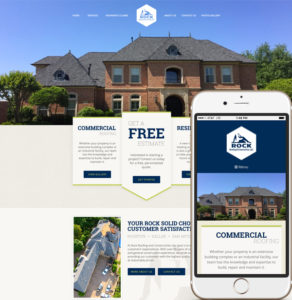
Mobile Web Design for Rock Roofing and ConstructionAll standard websites can be accessed via a smartphone, but mobile websites are specifically designed to suit the device’s small screen, slow speed, and limited functions. Mobile sites show users exactly the same vital information, but in a way that it is easier and faster to navigate. By creating a mobile website for your business, you will be able to make the most of the new advertising opportunities that this technology offers.
Since the iPhone was first introduced in 2007, the number of people using smartphones has continued to increase. Studies show that since mid-2011 the average person now spends longer on their phone than they do on their PC. As a result, a more specialized mobile marketplace has emerged. A mobile website differs from a standard website in a number of ways:

  • – Pages are more compact so that they are easily viewable on a smaller screen
  • – Websites load faster to suit limited smartphone capability
  • – All data is simplified to make it easy to negotiate
  • – Flash and other multimedia elements that are not compatible with all mobile devices are avoided

How To Create A Successful Mobile Optimized Website

A typical user spends an average of 77 minutes per day on their smartphone, so creating a well-designed, mobile optimized website can boost your business’s online visibility and yield significant results.

Here are just a few features that a successful mobile website should include:

Simple layout

The most important difference between a mobile site and a standard site is the way that it is laid out. Your website needs to be easy to read on a much smaller screen. The key design aim is to prevent the user getting lost in navigation. Here are just a couple of changes that should be made:

  • – Cut out all non-vital information
  • – Limit the number of categories you have
  • – Reduce the number of links per page
  • – Prioritize links in order of popularity and importance
  • – Avoid using forms or tables

Fast download speeds

The larger the data size of a page, the longer it will take to load. This is true of every website, but keeping data size low is particularly important in those designed for smartphones. If your website is slow to load, users can quickly get frustrated and move onto other sites. The more pages they are able to view in a set time, the more likely they are to see something they want to buy.

Integrate with map

A wide range of mapping functions can be included as part of a mobile website. The technology is able to alert a customer when they are close to your premises or navigate them directly to it. This feature is particularly useful for small and local businesses which often go unnoticed when standing next to larger chain stores.

Connect with offline media

Smartphones are carried with people wherever they go, so the devices have an unprecedented ability to connect online and offline forms of advertising. QR codes are scanned by a phone’s camera and will connect the web browser to a specific webpage, such as a landing page or buying page. The code can be added to magazines, posters, brochures, and any other form of print advertisement.

The Results You Can Expect From A Mobile Website

By creating a mobile optimized version of your website, you can increase your sales, boost your visibility, and make a positive difference to your business’s image. Here are just a few of the possible advantages:

Higher Google ranking

The higher up that a website appears in search engine results, the more likely it is to be visited by customers. This is especially true of the mobile internet because scrolling through results on a smartphone can be difficult. Search engines like Google are able to recognize when a person is using a smartphone and will feature mobile optimized websites higher in their search results. Your easy-to-read site will have an automatic advantage over your less up-to-date competitors.

Positive customer experience

Once a customer enters your site it is important that they have an enjoyable experience. If a webpage is difficult to read, then a user looking for specific information will simply move onto a more suitable site. By having a clear and concise layout, you can ensure that each visit creates a positive impression of your business.

More sales

Expanding your website to meet the needs of the mobile market is an ideal way drive up your profits. Making the buying process as simple as possible and reducing the number of steps it takes to get from landing page to purchase is key in maximizing sales.

A better brand image

Having a user-friendly, mobile optimized web page will give your business a contemporary, technology aware image. As mobile websites continue to become a mainstream reality, businesses without them are being left behind.

How To Get Started With a Mobile Website

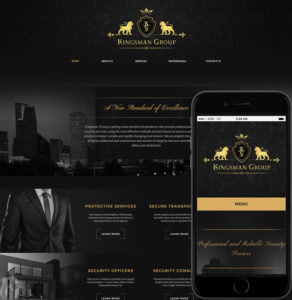
Mobile Web Design for Kingsman GroupCreating a mobile website opens your business up to a huge marketplace that is continuing to grow. However, without extensive online marketing knowledge, developing a successful mobile website design and overall advertising strategy can be almost impossible. Awkward navigation, convoluted design, and unnecessary graphics can all frustrate and put off potential customers.

If you are looking for an easier way to make the most of this emerging technology, an online marketing specialist can help you to create and manage your mobile website. Hiring the services of a professional will not only save you time and money in the long run, but it can also give you peace of mind that your website will be a success.

Is Your Business Using E-mail Marketing Yet?

E-mail marketing is one of the most effective ways to keep in touch with customers. It is generally cost-effective, and if done properly, can help build brand awareness and loyalty. At a typical cost of only a few cents per message, it’s a bargain compared to traditional direct mail at $1 or more per piece. In addition, response rates on e-mail marketing are strong, ranging from 5 to 35% depending on the industry and format. Response rates for traditional mail averages in the 1% to 3% range.

One of the benefits of e-mail marketing is the demographic information that customers provide when signing up for your e-mail newsletter. Discovering who your customers really are – age, gender, income, and special interests, for example – can help you target your products and services to their needs.

  • HTML vs. Plain Text. Response rates for HTML newsletters are generally far higher than plain text, and graphics and colors tend to make the publications look far more professional. The downside is that HTML e-mail is slower to download, and some e-mail providers may screen out HTML email.
  • Provide incentive to subscribe. To get customers to sign up for your newsletter, advertise the benefits of receiving your newsletter, such as helpful tips, informative content, or early notification of special offers or campaigns.
  • Don’t just sell. Many studies suggest that e-mail newsletters are read far more carefully when they offer information that is useful to the customers’ lives rather than merely selling products and services. Helpful tips, engaging content, and humor are often expected to accompany e-mail newsletters.
  • Limit questions. With each demographic question you ask may reduce the number of customers signing up, it’s best to limit the amount of information you solicit or give customers the option of skipping the questionnaire.

How NOT to Respond to Negative Reviews

Any business, whether a Fortune 500 company or a local mom and pop store, can suffer from bad publicity. With the amount of activity on social media sites like Facebook and Twitter, one person’s complaint about a particular aspect of your business can quickly turn into an avalanche of negative feedback if not handled properly. Worse still, handling the initial negative comment or comments incorrectly can have an even more damaging effect on your business and its image.

All it takes is one bad response to a negative review to start an ugly argument; the result being that poor response can tarnish your business’ reputation for a long time. When you respond badly to a negative review, your response won’t just be read by the initial reviewer. What you say can and likely will be read by everyone who reads your reviews or looks for your feed, whether it’s on Google, Facebook, Twitter, Yelp, or any other platform. It also shows that you can’t take criticism gracefully, and no one wants to do business with someone if they fear backlash from giving an honest review that is less than five stars.

What’s the proper way to respond to a negative review?

Regardless of how good your products and services may be, at some point, someone is going to feel like they got short changed. It’s just a fact of business. Twenty years ago, it may have resulted in an angry call or letter, but these days, an angry customer has the power to create a wave of distrust or fear with a few well-placed reviews. Take these steps to help prevent further damage:

  • Respond positively. Acknowledge that the negative reviewer was unhappy with some aspect of your service or product. Avoid becoming defensive – whether you were in the wrong or not, it automatically makes you look like you were if you take a defensive tone. Rather, be engaging, humble, and willing to listen.
  • Take it offline. Eliminate the possibility of a negative online discussion by asking the person to call your business directly so that you can discuss and remedy the issue in person. Not only will the customer feel as if you’re taking the time to right what they felt was wrong, but it also shows readers (potential clients) that you can respond appropriately, that you care enough to try to fix the issue, and that you’re willing to grow from the feedback.
  • Offer to make it better. There exists what Terry College of Business professors Michael McCollough and Sundar Bharadwaj call the service recovery paradox, which is the result of a very positive service recovery, causing a level of customer satisfaction and/or customer loyalty even greater than that expected if no service failure had happened. If you can manage to help your negative reviewer feel as though the wrong was righted and gain back their business, it is possible to recover from a negative review.

The Big Splash Team is Growing

Here at Big Splash, we’ve been very fortunate to experience continued growth and we’re currently looking for additional team members. Specifically, we’re searching for a Web Developer and an Online Marketer .

Visit our Contact Page to let us know you’re interested.